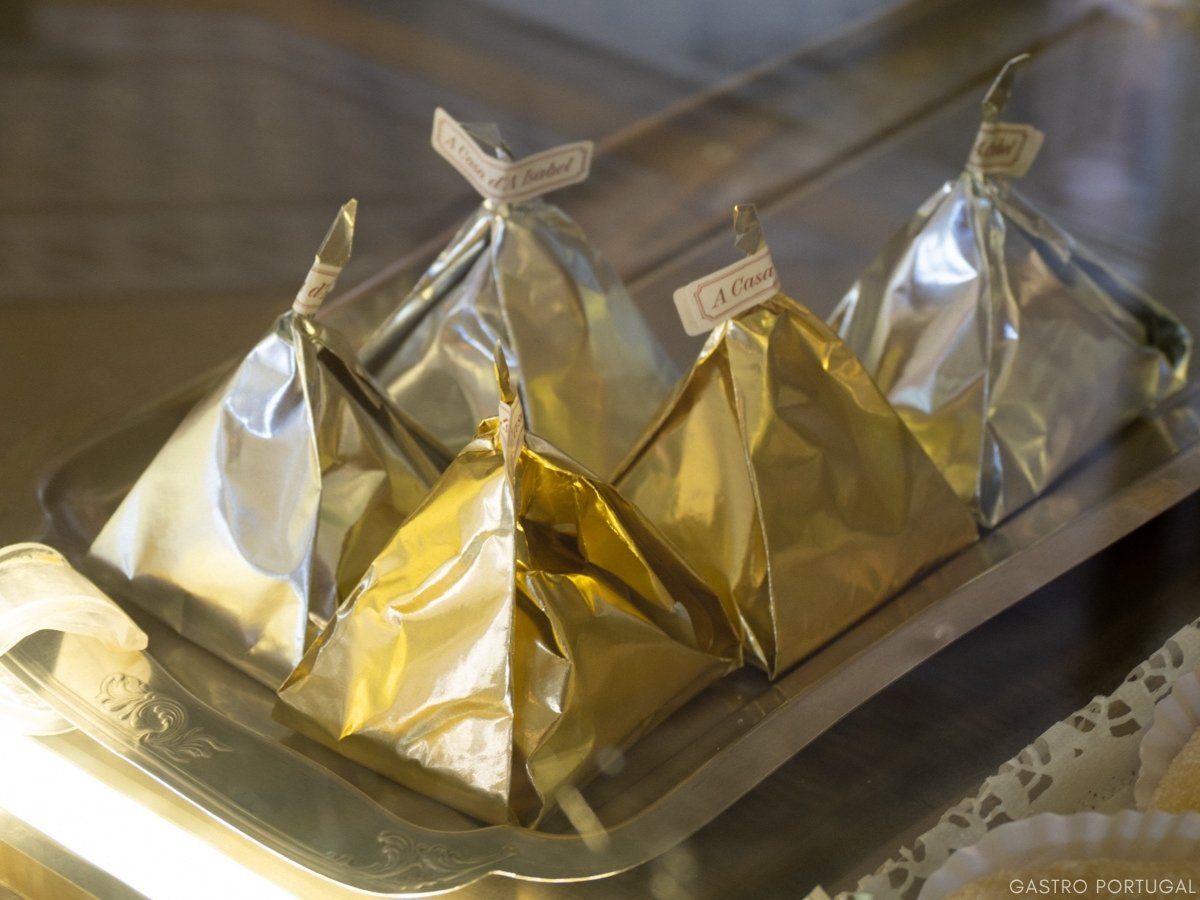
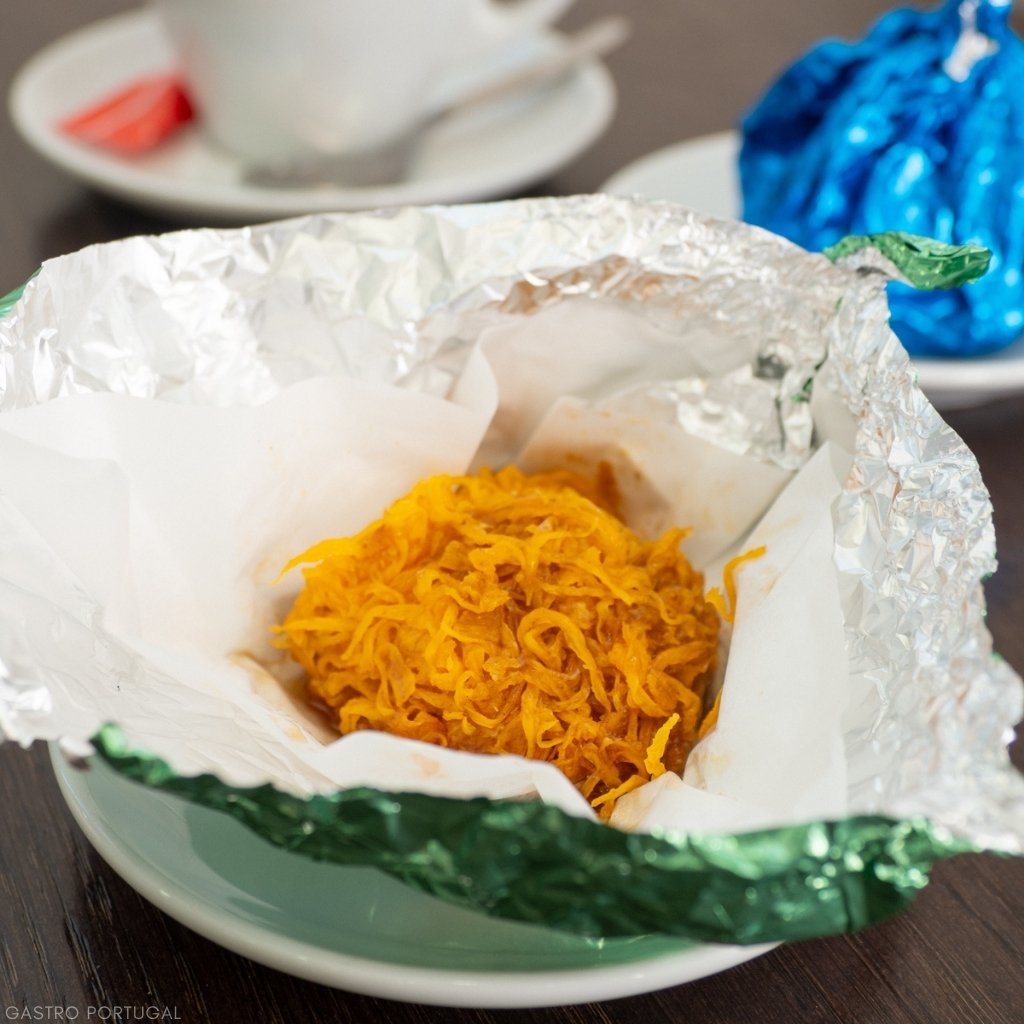
Dom Rodrigo is a traditional sweet from the Algarve made with egg yolks, ground almonds, cinnamon, and a rich sugar syrup. With their pyramidal shape and colourful tin foil packaging, they stand out among the sea of yellow Portuguese pastries. Inside these little pyramids are little nests made with doce de ovos and fio de ovos soaked in a golden caramel. Keep reading to learn more about this Algarvean delicacy!
Dom Rodrigo: Algarve Flavours in a Shiny Parcel
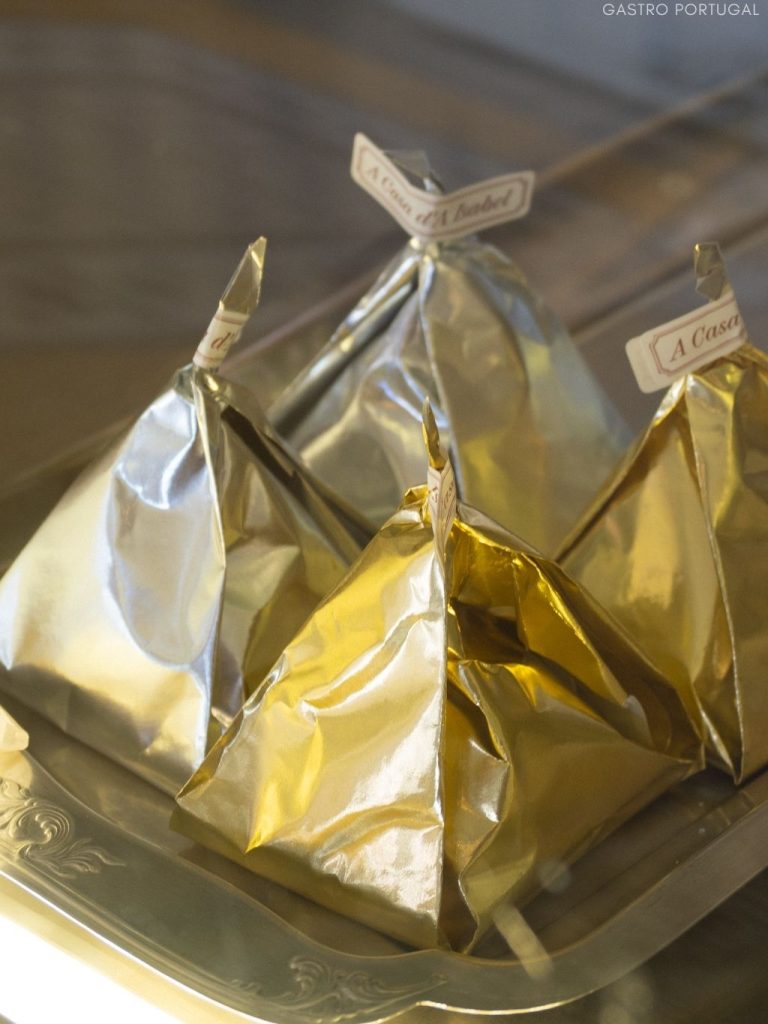
If you’ve been to a typical pastelaria in the Algarve you probably noticed these shiny parcels shaped like a pyramid, sometimes more like a crumpled ball of foil. They are called Dom Rodrigo and are to the Algarve what pastéis de nata are to Lisbon!
Their concept can be a little tricky to understand for those not well versed with Portuguese conventual sweets. First, you need to understand two other, highly traditional, Portuguese sweets; doce de ovos and fio de ovos. They are both made almost entirely of egg yolks and are featured in hundreds of conventual sweets.
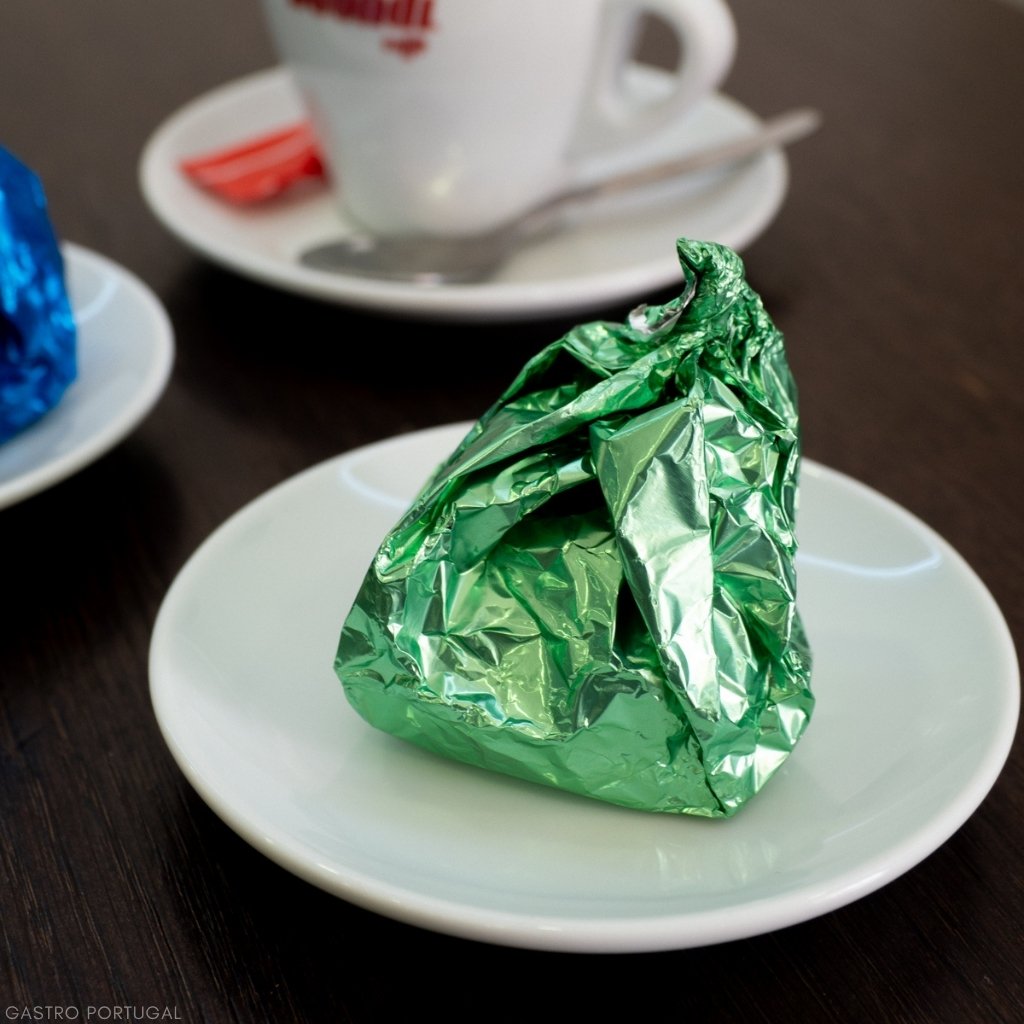
Dissecting the Dom Rodrigo (the sweet of course)
Doce de Ovos or Ovos Moles is a sweet egg cream or custard made of egg yolks and a simple syrup cooked at low heat until it becomes thick and glossy. It can be savoured as is, used in desserts, or as a filling for pastries and cakes.
Now Fio de Ovos are achieved by lightly whisking egg yolks and drizzling them into a pan of hot syrup to cook. The result is sweet egg threads that look like thin noodles. Once again, they appear in dozens of Portuguese pastries and cakes.
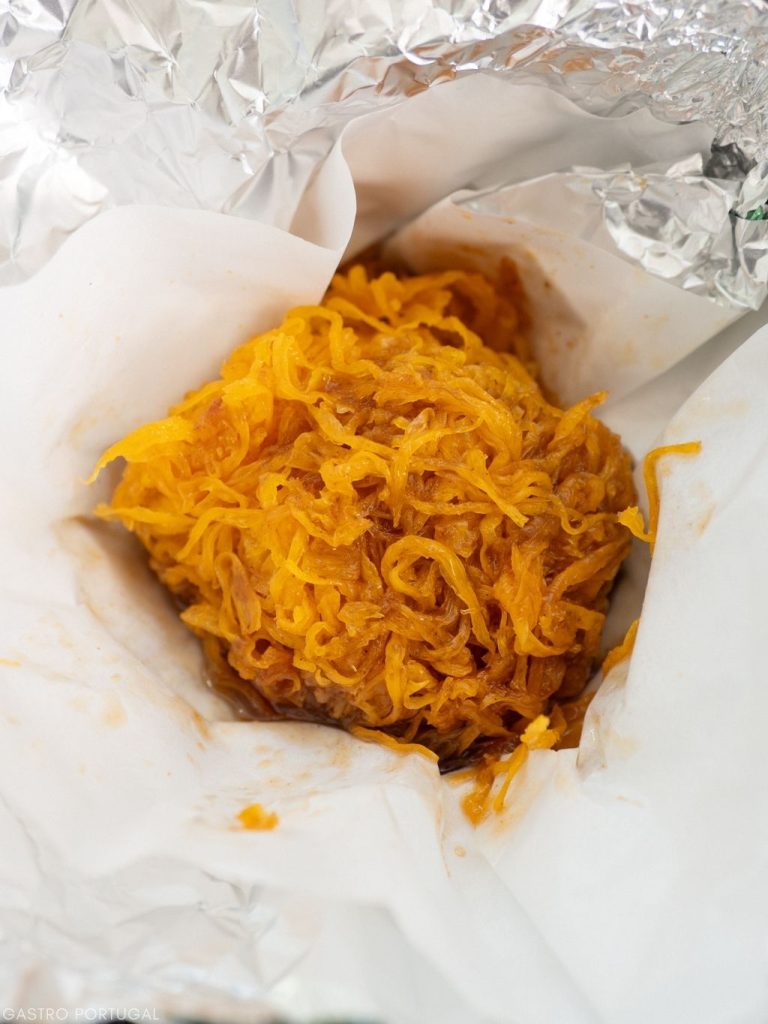
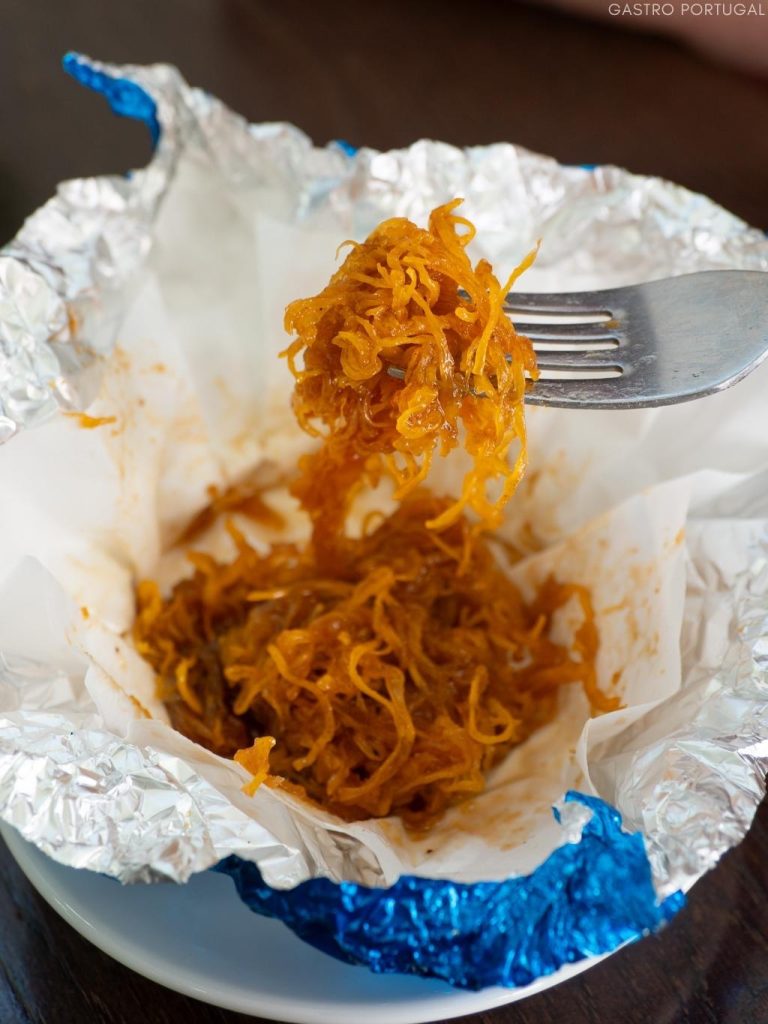
Back to our Dom Rodrigo, the doce de ovos is then mixed with cinnamon powder, and ground almonds (a staple in Algarvean sweets) creating a thick paste. This paste gets shaped like a ball and then covered in fio de ovos. These nests are then caramelised in a frying a pan with more syrup before they are ready to be packaged with their shiny wrappers.
The Story Behind the Algarve’s Most Famous Sweet
Dom Rodrigo is believed to have been created in the 18th century by the nuns of the Convent of Our Lady of Mount Carmel Convent in Lagos. The sweet was named after Dom Rodrigo de Menezes, a Portuguese nobleman who served as the Governor and Captain-General of the Algarve. Dom Rodrigo reportedly helped rebuild the convent following the 1755 earthquake, and the nuns in order to show their gratitude named their sweet creation after him.
A couple of sources claim Dom Rodrigo was invented in Tavira instead, by the nuns of Convento das Bernardas. In this version the Governor would’ve moved to Tavira after the earthquake and the nuns welcomed him to town with a sweet carrying his name.
It is a fact that the Governor served as inspiration to whoever named the sweet Dom Rodrigo and since this debate couldn’t be settled to this date, both towns are usually credited with the invention of this doce conventual.
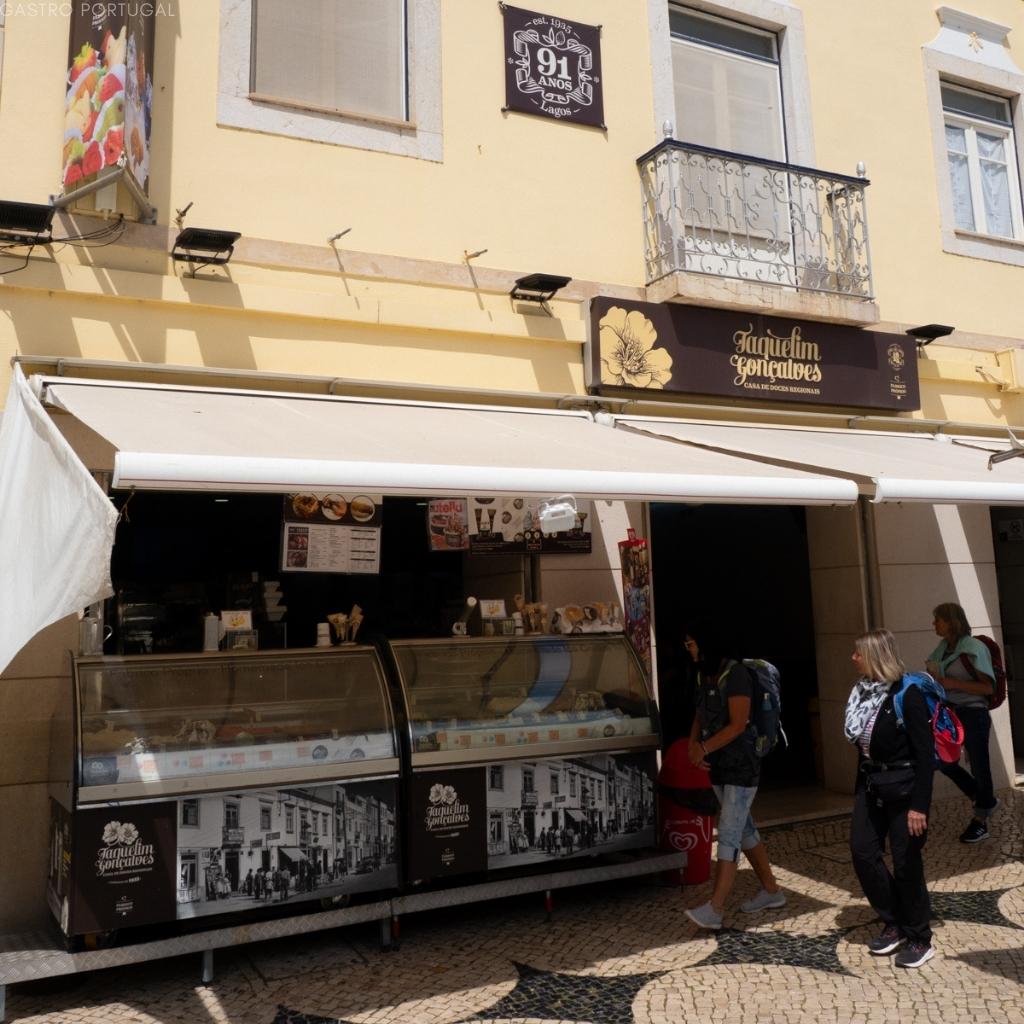
Taquelim Gonçalves: The First Pastelaria to Sell Dom Rodrigo
It is said the Dom Rodrigo prepared by the nuns was reserved to parties in palaces and grand houses where it was served in dessert bowls. Almost two centuries later, a Lagos family perfected the conventual recipe and are credited with introducing the iconic tin foil wrapping.
Pastelaria Taquelim Gonçalves were the first to commercialise the sweet, and are credited with popularising the Dom Rodrigo, now a classic across the Algarve. The pastelaria, now almost a hundred years old, still exists in downtown Lagos and have what many consider the Algarve’s very best Dom Rodrigo.
Dom Rodrigo IGP – A Certified Algarve Sweet Since 2025
Last year, Dom Rodrigo was finally granted the status IGP (Indicação Geográfica Protegida) status. That means only the sweets produced within the the 16 municipalities of the Algarve region, following traditional methods, can be called Dom Rodrigo. Each Dom Rodrigo now carries a code and can be traced to its producer.
Best Places to Sample Dom Rodrigo
Taquelim Gonçalves (Lagos): The original Dom Rodrigo as we know it, they are located in Lagos downtown at Rua da Porta de Portugal 27. With a recipe that’s been passed down through generations since 1935, their Dom Rodrigo is arguably the best one in the Algarve. As well as local conventual sweets you will find all your pastelaria classics like toasties, pastries, and sandwiches.
Pastelaria Amendoal (Loulé): This traditional pastelaria in Loulé has one of my favourites Dom Rodrigo in the Algarve! They also serve traditional Algarvean sweets in all shapes and sizes. They are next door to the Mercado at Largo Gago Coutinho 20.
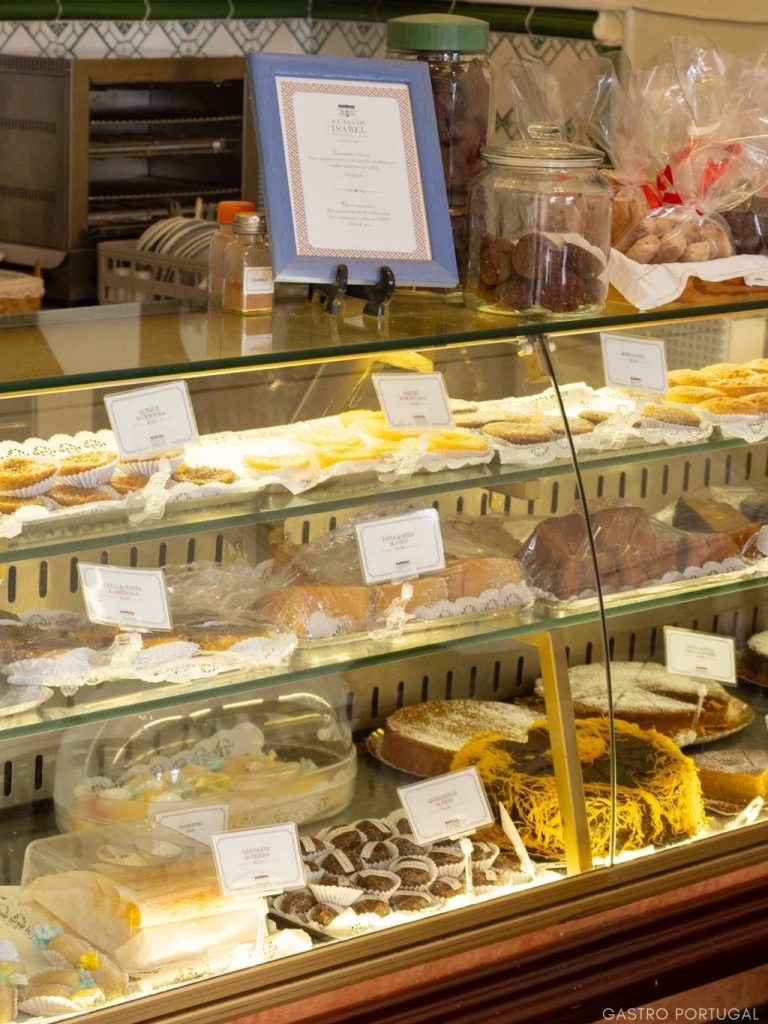
A Casa da Isabel (Portimão): A charming tea house and pastry shop in Portimão which specialises in regional Algarve sweets and cakes. Their Dom Rodrigo is as good as the ones from Taquelim Gonçalves. Though they also serve their own creations such as the Algarve trilogy: a tarte featuring three layers containing figs, almonds, and carob. Their address is Rua Direita 61.
Should You Try Dom Rodrigo?
The short answer is yes, absolutely. The long answer is you won’t find anything else like it! It is an Algarve delicacy and it combines traditional flavours of the region such as almonds, cinnamons, ovos moles, and fio de ovos. It goes beautifully with an espresso, and what’s more, it can feel quite whimsical to open the shiny parcels to find the sweet little nests inside. So next time you visit the Algarve, make sure to give these little foil pyramids a try, now you already know they are called Dom Rodrigo!
More Portuguese Sweets and Pastries You Will Love!
- Folhado de Loulé – Is this Portugal’s Flakiest Pastry?
- Pastéis de Chaves – Portugal’s Traditional Meat Pastry
- Fofos de Belas: Is This Portugal’s Fluffiest Sponge Cake?
- Penichenses – The Almond Tarts You Didn’t Know Existed
- Travesseiros de Sintra – Sintra’s Pillow Shaped Pastries
- Tortas de Azeitão – The Iconic Golden Cake from Azeitão