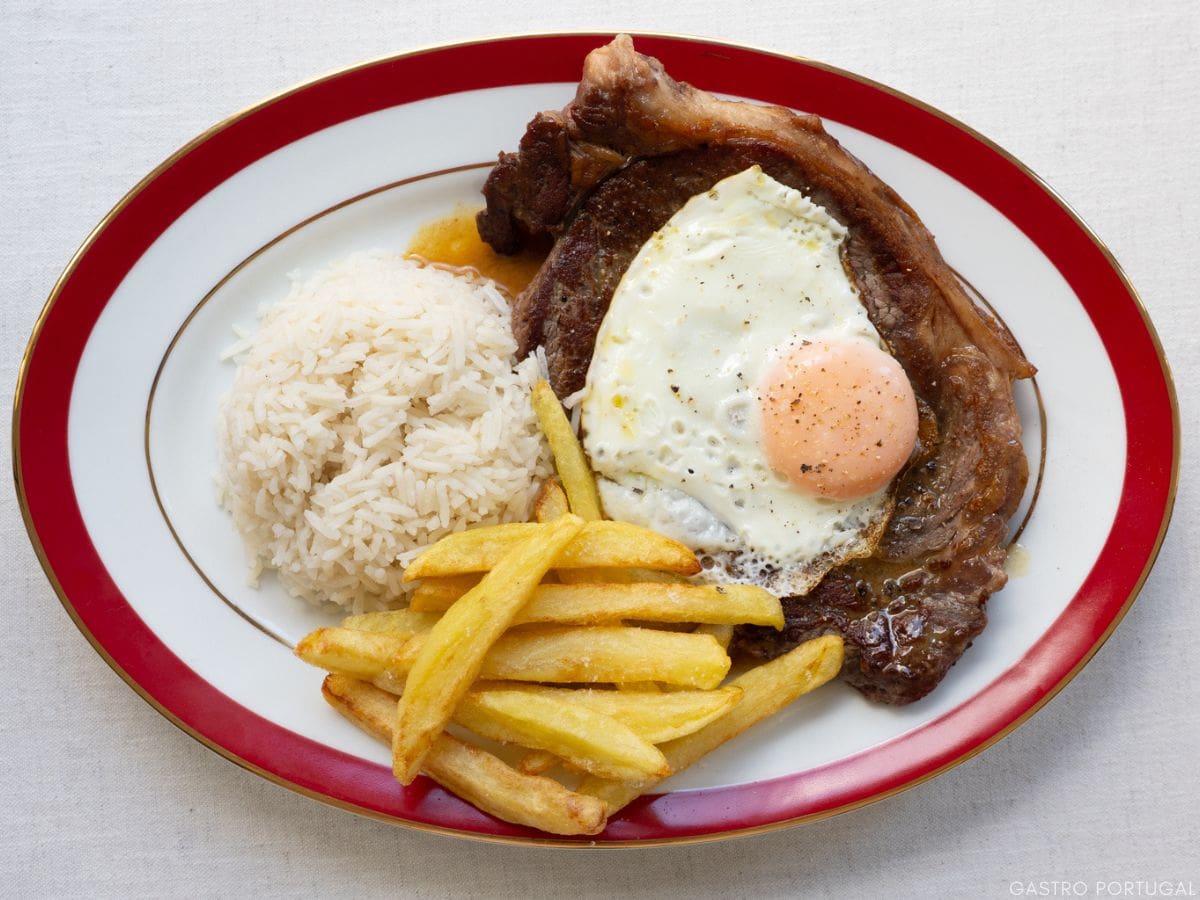
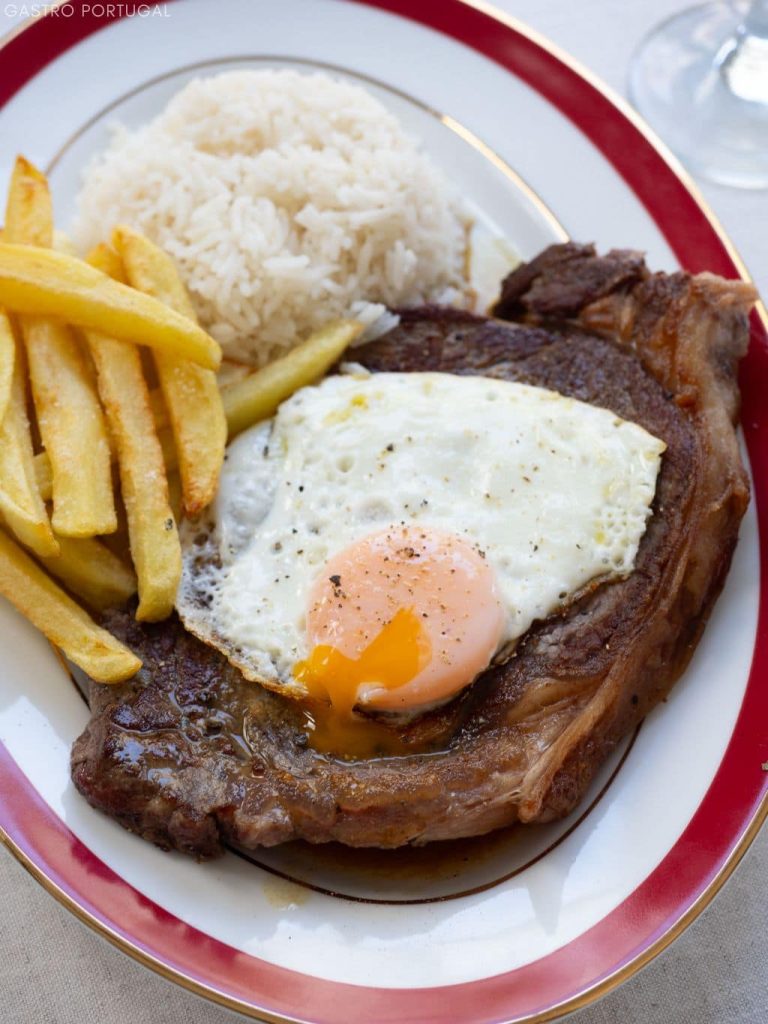
The Portuguese style Steak and Eggs combines a sirloin steak topped with a fried egg and drizzled with a delicious sauce made with sautéed garlic, butter, white wine, and the juices of the meat. It’s usually served with French fries, white rice, or with a simple salad. Bitoque is a popular workers lunch available in most snack bars and family restaurants across Portugal. It isn’t essentially a fancy meal, but you will find gourmet versions at high end restaurants too. Continue to read to learn how to make Steak with Egg the Portuguese way!
Bitoque – A Classic Portuguese Work Day Lunch
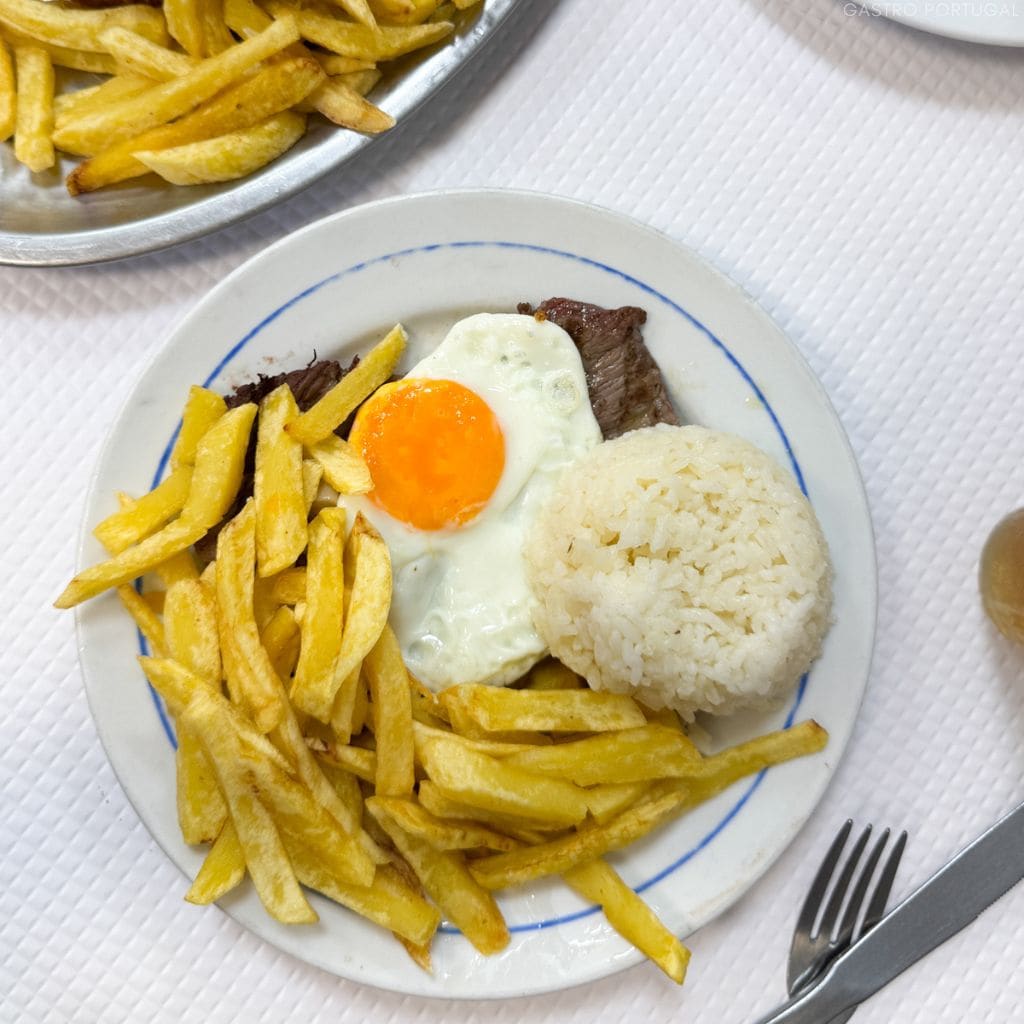
Nothing quite beats eating a bitoque in a traditional Portuguese tasca. Imagine you are sat on a table covered with a disposable paper cloth, your Super Bock is so cold the paper is dissolving underneath it. In front of you, a large serving of steak, fried egg, rice, soggy fries, all covered in a delicious buttery sauce. It’s a feeling every Portuguese person knows.
Bitoque is an absolute classic and a popular workers lunch. You will find it in every tasca and family restaurants across Portugal, and is usually one of the most afordable meals on the menu. Traditional restaurants take particular pride in their bitoques, and will compete for the tile of ‘the best bitoque in town’.
How to Make Authentic Portuguese Skeak with Egg
The Bitoque, sometimes referred to as ‘Portuguese Steak’ is perhaps the most traditional way of eating steak in Portugal. The preparation is very similar to that of Pica-pau, where you first sear the steak in some olive oil, and then use the pan residue to make a sauce with crushed garlic, white wine, bay leaves, mustard, butter, and sometimes piri piri flakes or sauce. As well as the bay leaf, I always add some fresh thyme, although not super traditional, I think it goes well with the dish and adds so much flavour to the sauce. I also add a dash of Worcestershire sauce (known locally as molho inglês or English sauce) in my bitoque sauce for an extra touch of umami.
The steak is then served with a fried egg on top, preferably with a runny yolk. The classic recipe calls for beef or pork, but you will find modern versions with chicken or tuna fillets too. Bitoque is typically served with rice, fries, or a simple salad. As a Brazilian that loves her carbs, my choice is always rice and fries!

Choosing the Perfect Steak for your Bitoque
When it comes to Portuguese steak recipes, there’s always the debate on what type of steak should be used. While some people prefer softer cuts such as sirloin or tenderloin, others claim any beef can be used as long as it’s tenderised. The average tasca don’t disclaim what cuts they use, and on the menu you will simply find ‘Bitoque de Novilho’ ‘Bitoque de Frango or ‘Bitoque de Porco’.
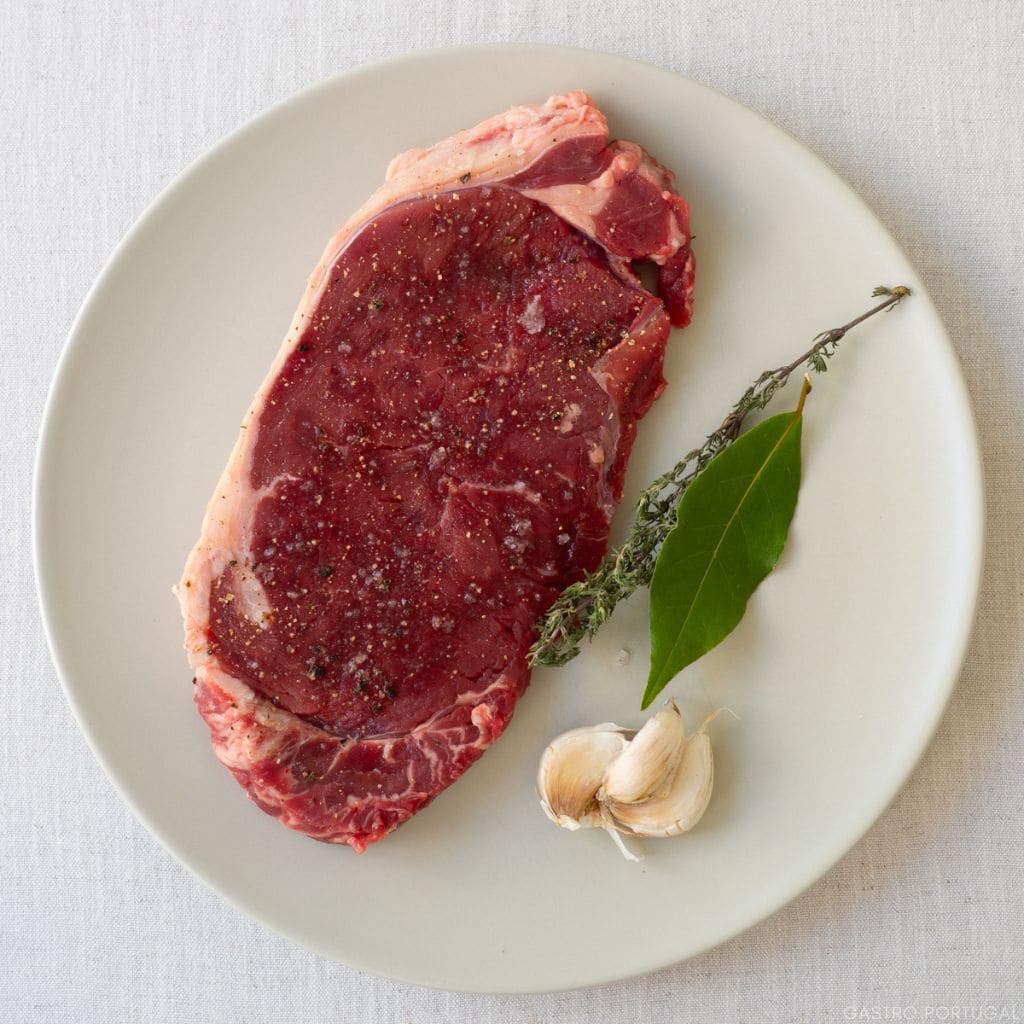
My steak of choice for this dish is sirloin steak, called bife da vazia in Portugal, which is pretty much foolproof and will turn out soft even if you accidentally overcook it. You can also use rump steak or tenderloin. Ultimately, you can use this recipe to cook any steak you’d like, it will turn out delicious and full of Portuguese flavours!
How to Make Bitoque – Classic Portuguese Steak with Egg

Bitoque de Vaca – Portuguese Style Steak with Egg
1
servings10
minutes20
minutes739
kcalA Bitoque typically combines steak topped with a fried egg and drizzled with a delicious sauce made with sautéed garlic, butter, and white wine!
Ingredients
1 Sirloin Steak (approx. 350g)
1 Egg
3 tbsp Extra Virgin Olive Oil
20 g Cold Butter
1/3 Cup White Wine (80ml)
3 Garlic Cloves
1 Bay Leaf
1/3 tsp Chili Flakes
1 tsp Dijon Mustard
1 tbsp Worcestershire Sauce
1 Sprig Fresh Thyme
Salt – to taste
Black Pepper – to taste
2 Red Skin Potatoes
1 L Vegetable Oil – for frying
Directions
- Start by peeling the potatoes, then cut them into finger-size chips. Rinse under cold water and drain. Pat with kitchen paper making sure the chips are bone dry. Set aside.
- Meanwhile, pat the steak dry with kitchen paper, then season on both sides with salt and black pepper to taste. Set aside.
- Add the vegetable oil to a pan suitable for deep frying. Slowly heat the oil over low to medium heat until it reaches around 180°C.
- Fry the chips in batches until lightly golden. You can double fry them if you prefer your chips crispier. Transfer to a plate lined with kitchen paper. Season with salt to taste. Set aside.
- With the back of a knife, lightly crush the whole garlic cloves, set aside as well.
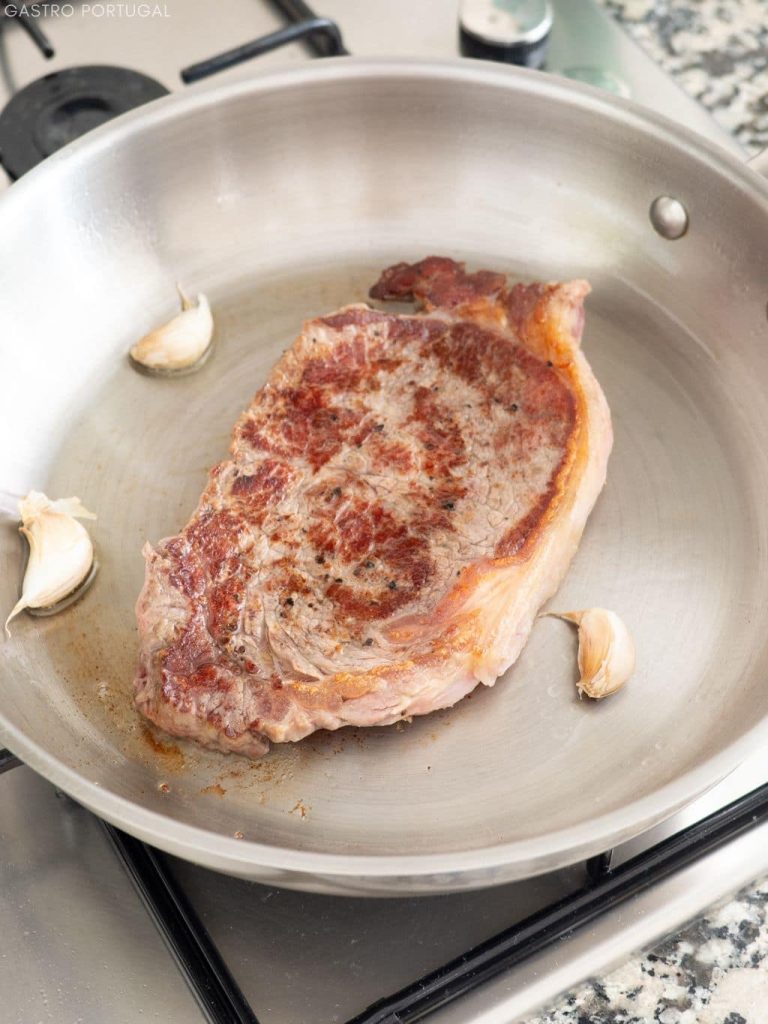
- Place a large stainless steel frying pan over medium to high heat. Once hot, add in 2tbsp of olive oil, and the steak. Sear the steak for about 2 minutes on each side. It should have a nice golden brown sear on both sides. Chuck in the crushed garlic halfway through. Transfer the steak to a grid to rest while you make the sauce.
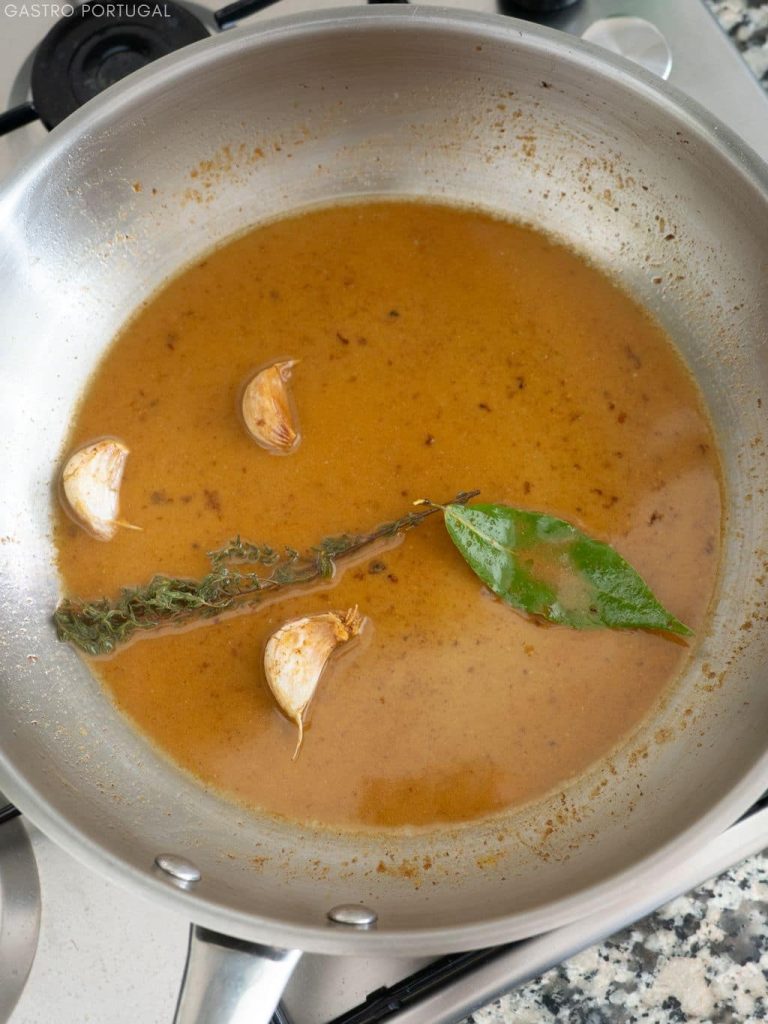
- Reduce the heat to medium low. Deglaze the pan with the wine wine, gently scraping the bottom of the pan with a wooden spoon to release the caramelised bits. Once the alcohol evaporates, add in the fresh thyme, bay leaf, chilli flakes, the Dijon mustard, and the Worcestershire sauce. Continue to stir for another 2 minutes.
- Turn off the heat, add in the cold butter, stirring well to emulsify. Season with more salt and black pepper.
- Place a non-stick frying pan over medium heat, add the remaining tbsp of olive oil. Fry the egg until the whites are cooked through but the yolk is still runny.
- Serve the steak with a couple of spoons of the sauce, the fried egg on top, and the fries on the side. The Portuguese bitoque is also usually served with white rice or a simple salad. Enjoy!
Notes
- This recipe serves 1 person, however, you can just double or triple the recipe for more servings. No adjusting is needed.
- Remove the steak from the fridge at least 30 minutes before cooking.
- Avoid using non-stick frying pans to cook the steak as they don’t create the caramelisation necessary to make the sauce.
Have you tried this dish? Let me know in the comments!