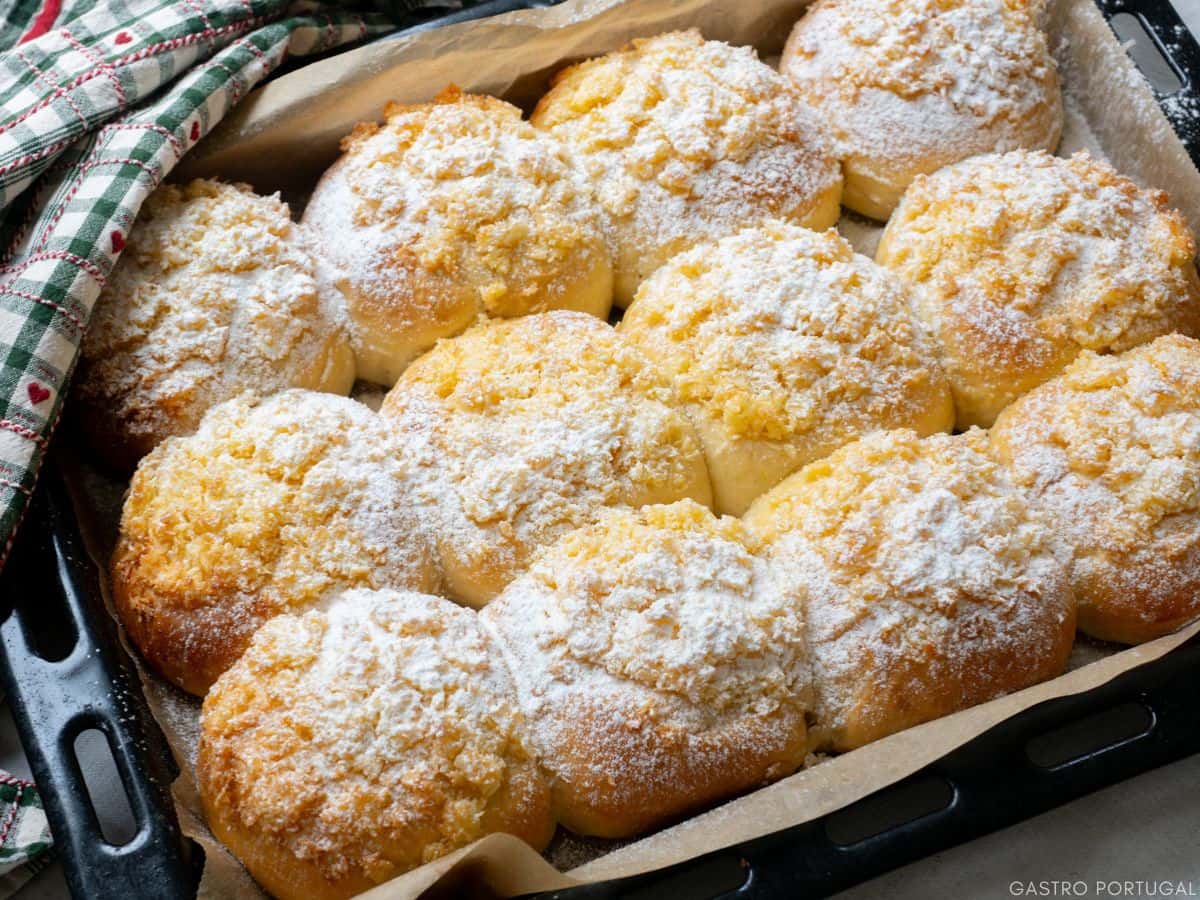
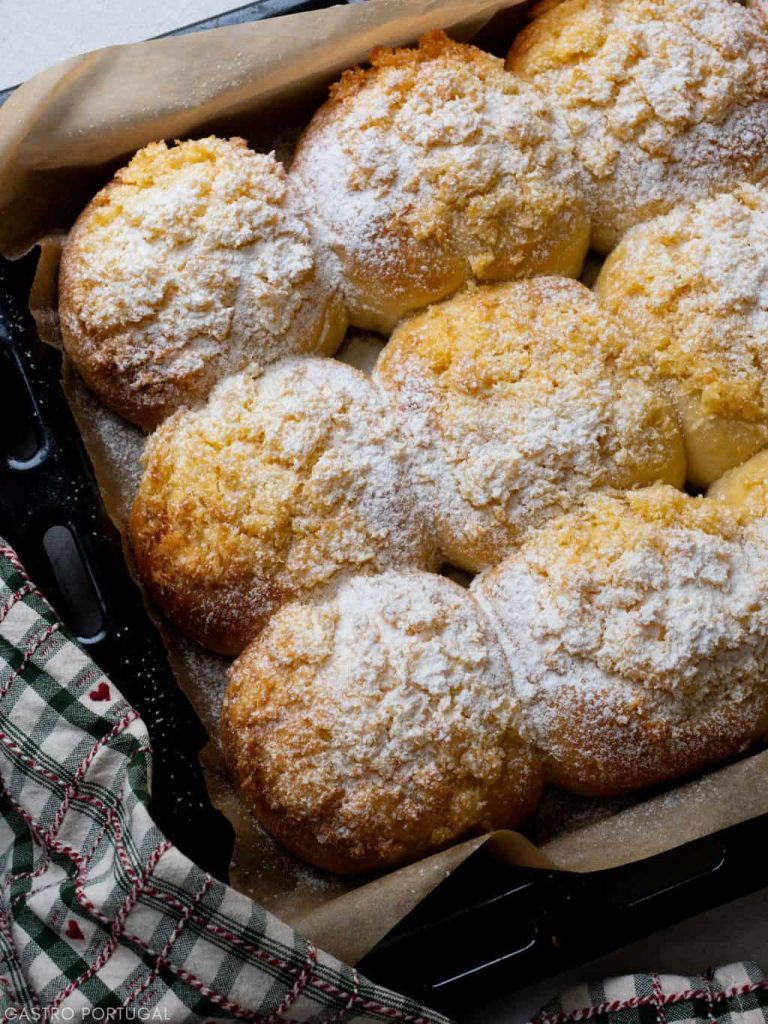
Pão de Deus is a traditional Portuguese sweet bun topped with a mix of coconut flakes, sugar, eggs, and butter. Translated as ‘God’s Bread’ this Portuguese bread resembles a brioche bun, and can be appreciated as is or, a little controversially, used in a ham and cheese sandwich.
Pão de Deus: Portuguese God’s Bread
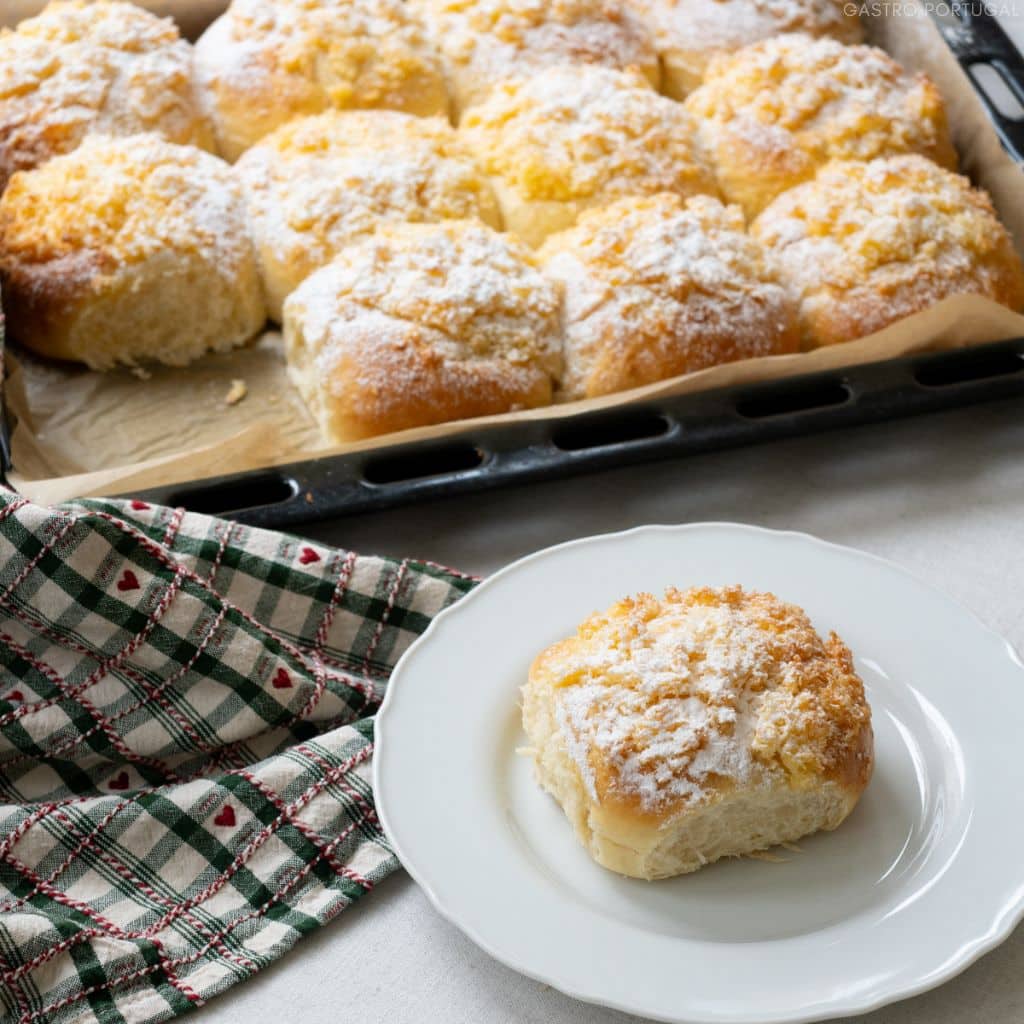
Pão de Deus is perhaps the most iconic of the Portuguese breads. It combines a brioche bun flavoured with lemon zest (sometimes vanilla or rum) with a coconut topping which is baked until lightly golden and served with a dusting of powdered sugar. Pão de Deus or God’s Bread is a local’s favourite, and all pastelarias offer it. They are usually enjoyed at breakfast or as an afternoon snack.
Little is known about why they’re called pães de deus, although the name is speculated to have come from the secular tradition of pão-por-Deus (offerings of bread, wine, and cakes made in honour of the dead that take place on All Saints Day).
Pão de Deus: Is it Sweet or is it Savoury?
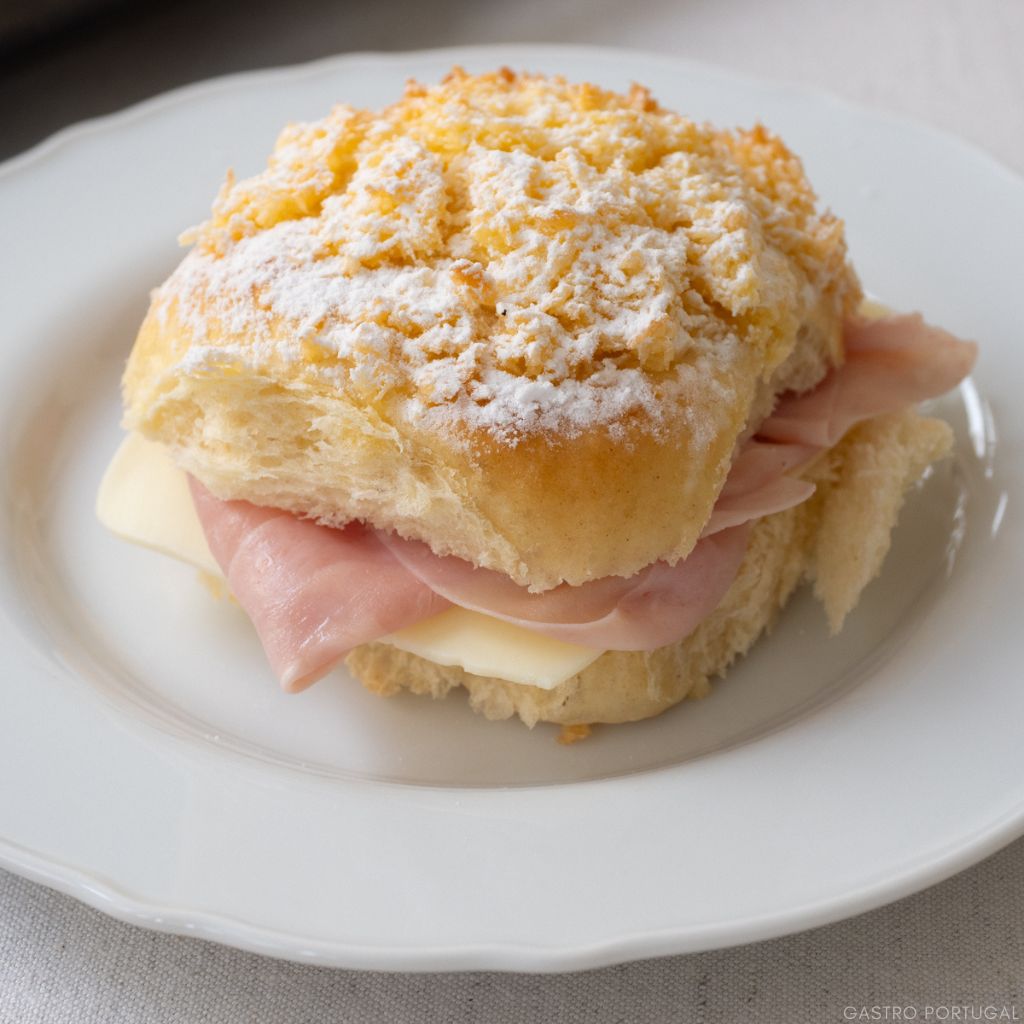
If you are a regular pastelaria goer, at some point you probably witnessed someone order pão de deus misto, that is pão de deus sliced in half and filled with butter, ham and cheese. Some go as far as having it toasted like a tosta mista. This isn’t something unanimous among the Portuguese, and most people enjoy it as is or with dab of salty butter.
Although described as a bread in Portuguese, with the lemon zest and the coconut top, pão de deus leans on the sweeter side of things. I love sweet-savoury combinations, however, I’m still a little sceptical of this one. Maybe it’s an acquired taste, who knows? For now, I’ll be enjoying my Portuguese bread of God with butter or jam.
Ingredients for An Authentic Pão de Deus
You probably already have all ingredients needed to make an authentic Portuguese pão de deus. To make the brioche buns you will need strong bread flour, sugar, milk, eggs, butter, salt, instant dry yeast and the zests of a lemon. The dough can also be flavoured with vanilla extract or rum. Now to make the coconut topping that goes on top of the buns you will need desiccated coconut (preferably unsweetened), sugar, eggs, and butter. You will also need some powdered sugar to sprinkle on top of the buns once they’re baked. Don’t skip this step as it makes a huge difference!
How to Make Pão de Deus
Since this dough is enriched with butter, I highly recommend using a stand mixer with the hook attachment to knead it. It will not only make the whole process quicker and mess free, but you’ll also get better results!
The first step is to add the dry ingredients (flour, sugar, instant dry yeast, and salt) directly into the bowl of your stand mixer, then mix on the lowest speed for a couple of seconds to combine. You then add in the wet ingredients (milk, eggs, and zests of a lemon) except the butter which will be incorporated later on.
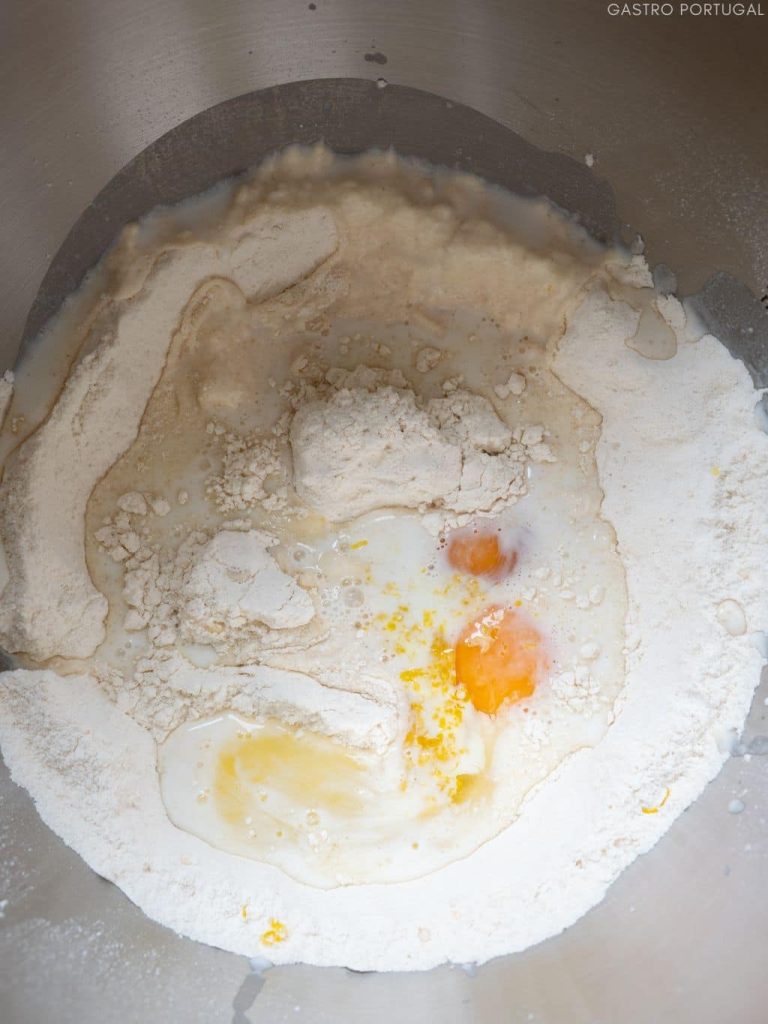
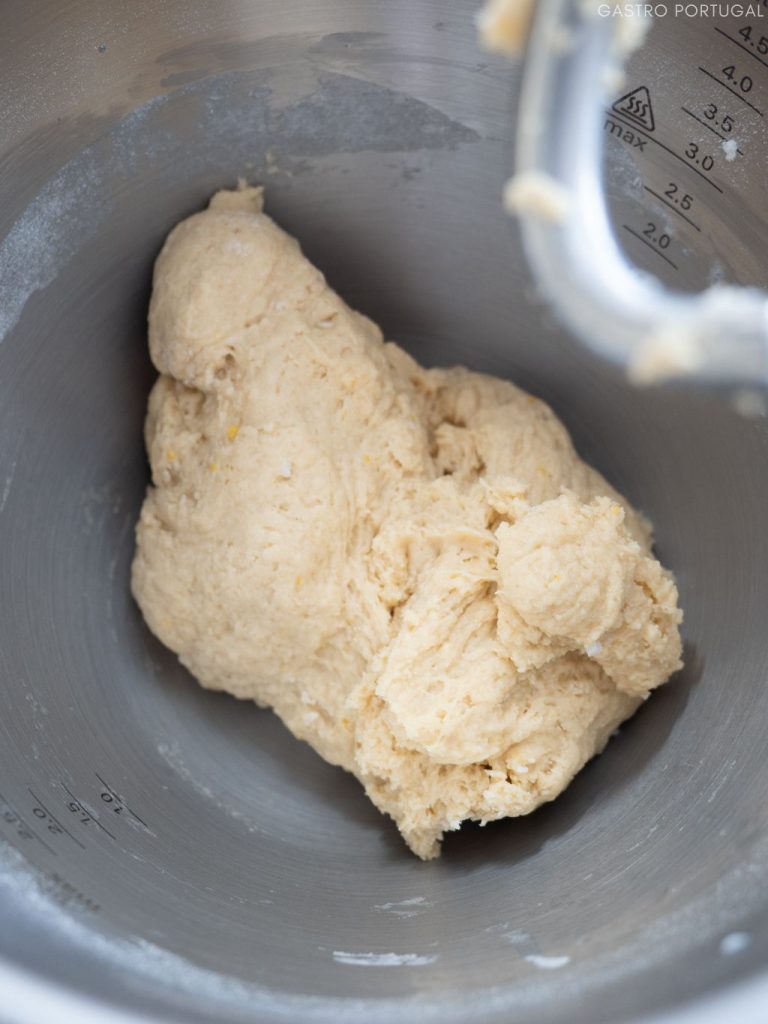
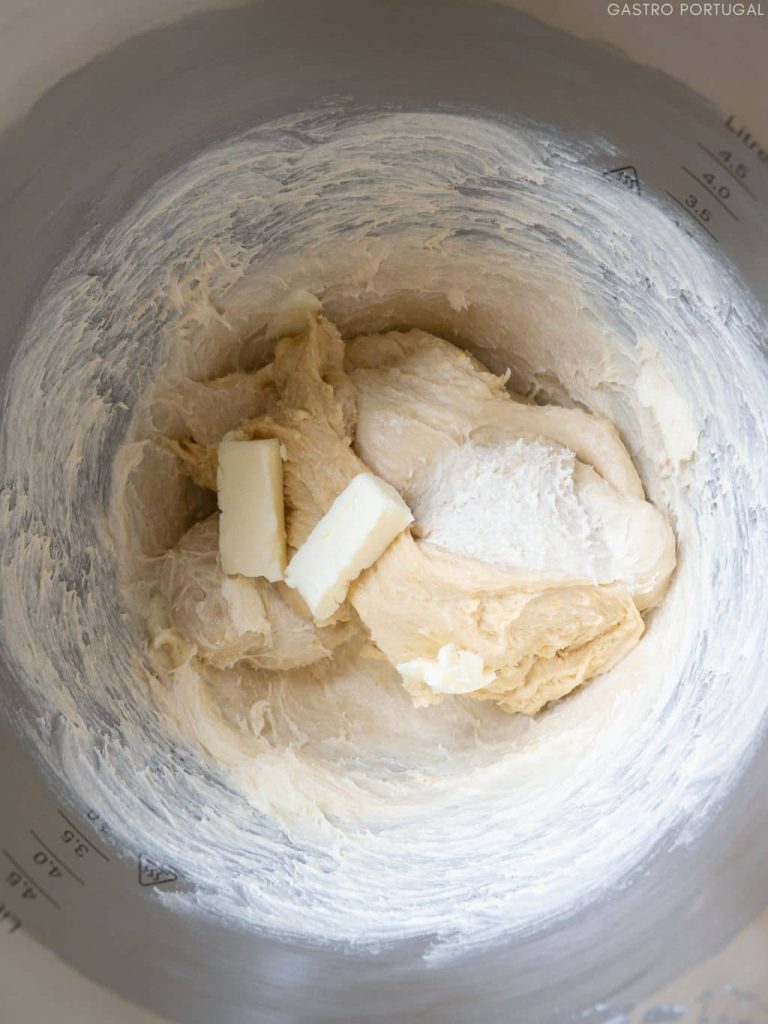
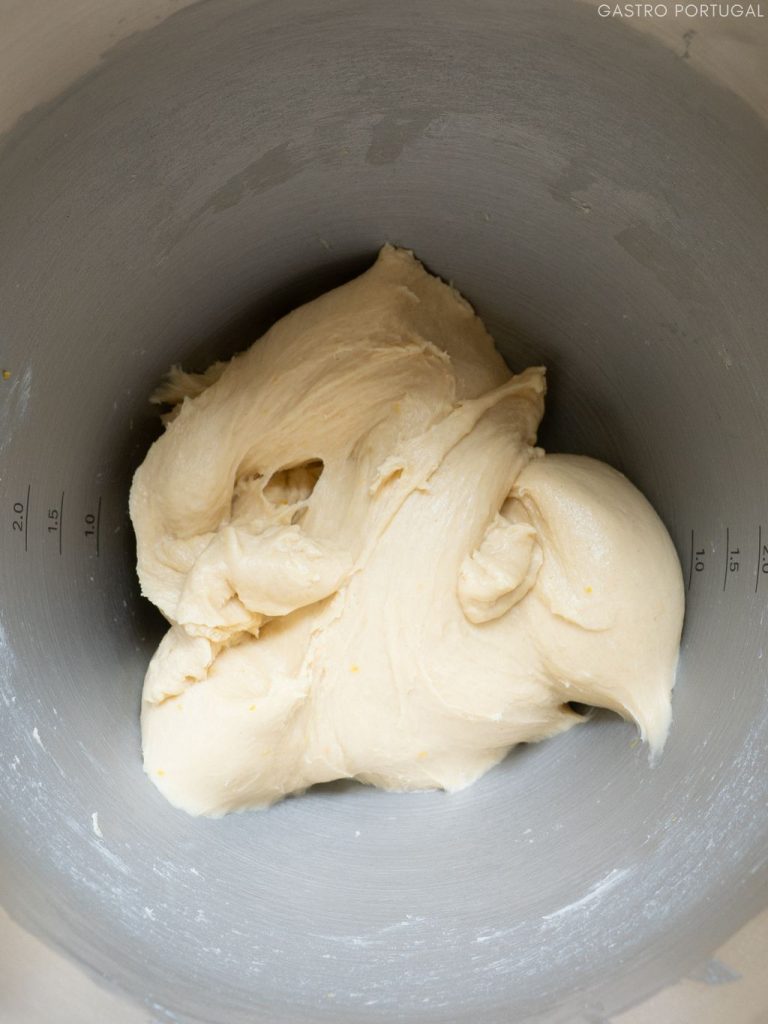
Switch to medium speed and knead for about 8-10 minutes, make sure to scrape the sides of the bowl every now and then so everything gets incorporated. Continue to knead over medium speed while adding the butter one piece at a time. Once you finish adding the butter, make sure to scrape the sides of the bowl before you continue. Increase the speed to high and knead for another 5 minutes or until the dough detaches from the sides of the bowl and is looking silky smooth.
Kneading the Dough Without a Stand Mixer
If kneading by hand, mix dry and wet ingredients in a bowl as per above, once the flour absorbs all the liquid, transfer to a floured surface and knead the dough for about 15 minutes or until the dough is elastic enough to be stretched without breaking. Alternatively, knead by hand on the surface while incorporating your room temperature butter until the dough no longer sticks to the counter and looks silky and smooth. It should take roughly another 10 minutes.
Proofing and Shaping the Buns
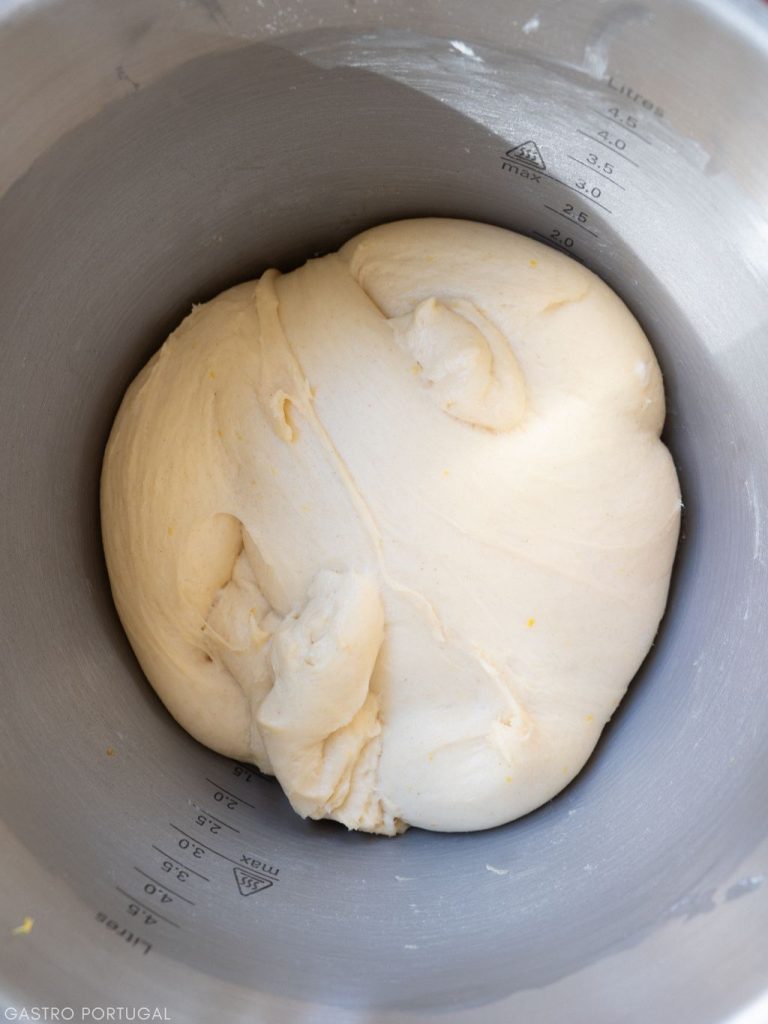
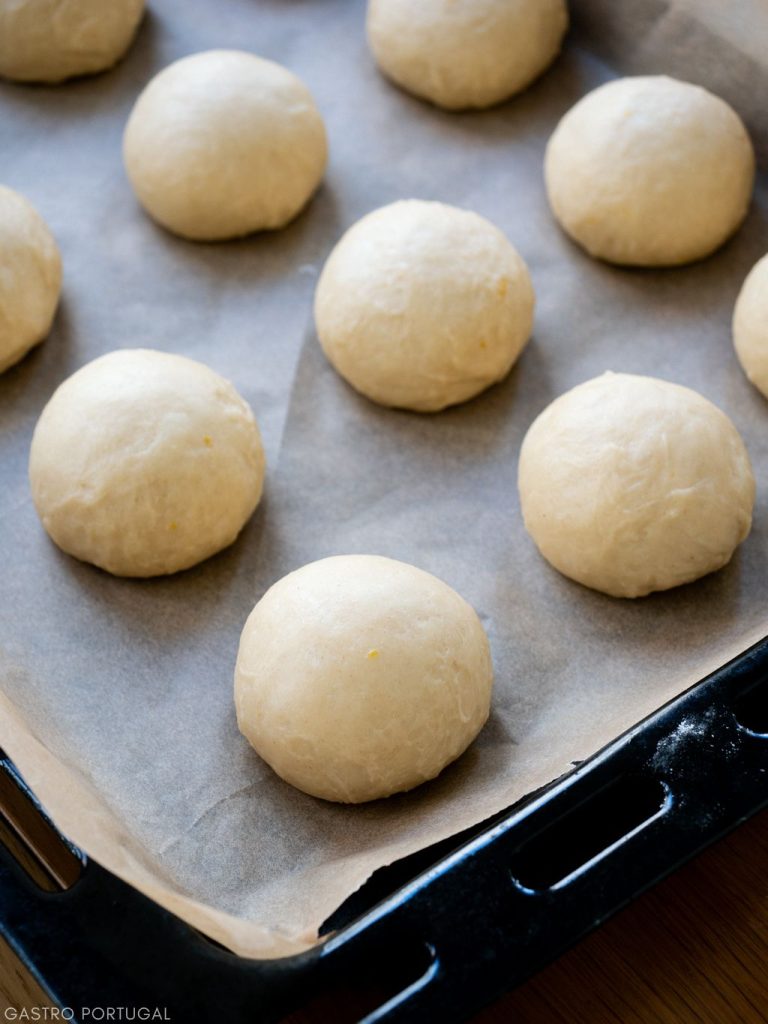
Cover the bowl with a damp cloth and let it proof in a warm corner of the house for about 2 hours or until the dough doubles in size. Transfer the proofed dough to a lightly floured surface then divide into equal balls of about 80 grams each. To shape them, place each piece of dough under the palm of your hand pressing firmly against the surface while you do circular movements. Transfer them to a baking tray lined with a sheet of parchment paper, leaving some space between the buns. Cover again with a cloth and let it rise for another 1 to 1.5 hours or until they double in size. Now preheat the oven to 180°C while you prepare the coconut topping.
Making the Coconut Topping
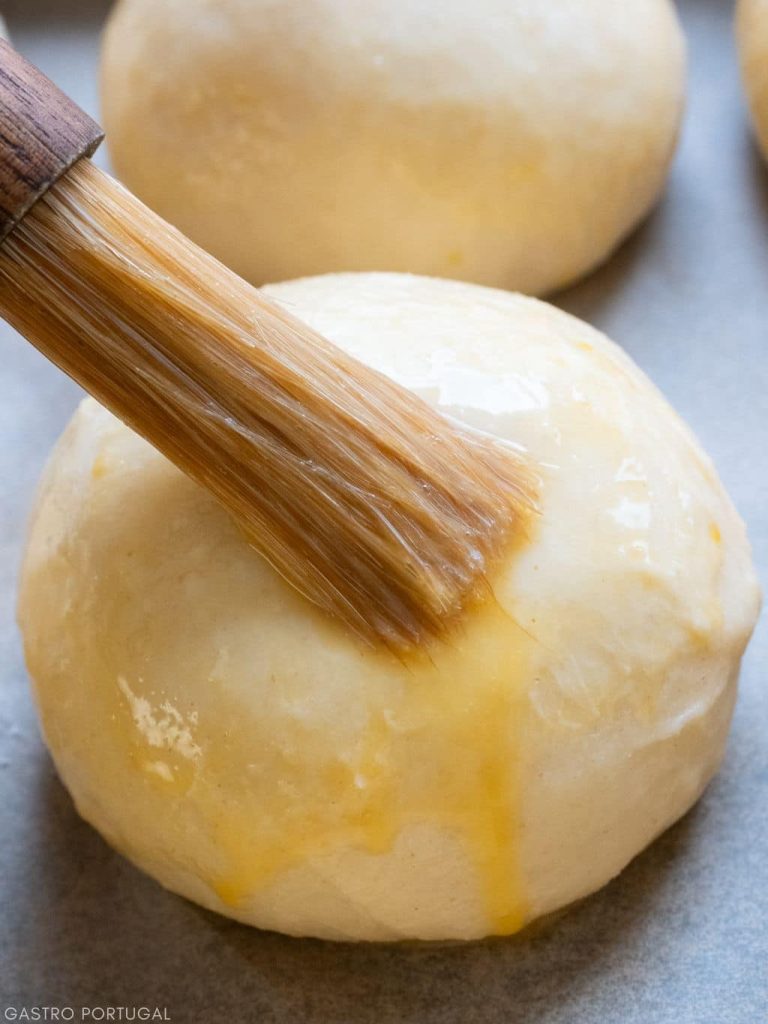
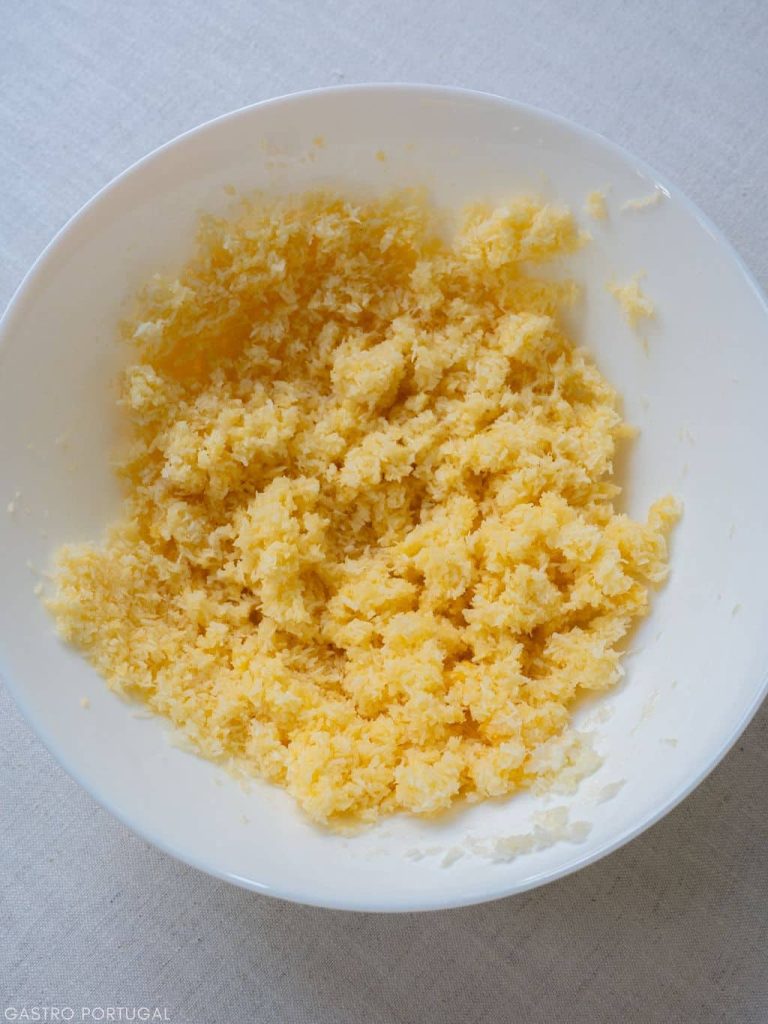
To make your coconut topping, simply combine the desiccated coconut with the egg, sugar, and melted butter, then set aside. Crack an egg into a separate small bowl, then whisk with a fork. Gently brush the top of the buns with it. Pour the remaining egg wash into the coconut mixture, and stir well to combine.
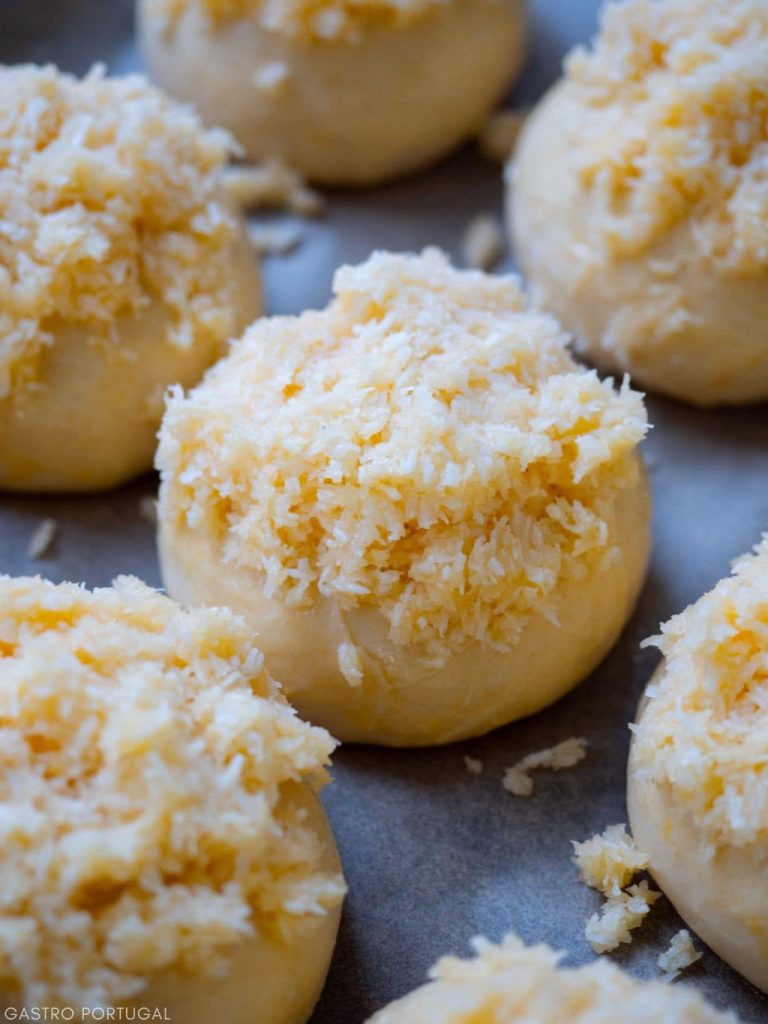
Top each bun with a generous amount of the coconut paste, then bake it for 25-30 minutes or until the buns are light and golden. Wait for the buns to cool down completely before sprinkling it with a dusting of powdered sugar. There you have it! Your coconut buns are ready to be enjoyed as is, with a dollop of butter or if you are feeling adventurous, with ham and cheese!
How to Make Pão de Deus – Portuguese Coconut Buns (God’s Bread)
)
Pão de Deus: Portuguese Coconut Buns (God’s Bread)
14
servings3
minutes25
minutes350
kcalPão de Deus is a traditional Portuguese sweet bun topped with a mix of coconut flakes, sugar, eggs, and butter.
Ingredients
- Dough Ingredients
600 g Strong Bread Flour
90 g Granulated Sugar
200 ml Full-fat Milk
3 Medium Eggs
120 g Cubed Unsalted butter – room temperature
10 g Salt
11 g Dry Yeast
1 Lemon – Zested
- Coconut Topping Ingredients
125 g Unsweetened Desiccated Coconut
50 g Granulated Sugar
2 Eggs (separated)
25 g Unsalted Butter – Melted
25 g Powdered Sugar -For Dusting
Directions
- Making the Dough
- Add the flour, sugar, instant dry yeast, and the salt directly into the bowl of the stand mixer. Mix on the lowest speed for a couple of seconds to combine.
- Add in the milk, eggs, and lemon zests. Switch to medium speed and knead for about 8-10 minutes. Make sure to scrape the sides of the bowl every now and then.
- Carry on kneading over medium speed while adding the room temperature butter one piece at a time. Again, scrape the sides of the bowl every now and then to make sure no butter is left behind.
- Increase the speed to high and knead for another 5 minutes or until the dough detaches from the sides of the bowl and looks silky smooth. Cover the bowl with a damp cloth. Leave it to proof on a warmer corner of the house for about 2 hours or until it doubles in size.
- Transfer the dough to a floured surface. Divide into equal balls of about 80g each. To shape them, place each piece of dough under the palm of your hand pressing firmly against the surface while you do circular movements.
- Transfer the buns to a baking tray lined with parchment paper, leaving some space between the buns. Cover again with the cloth and let it rise for another 1 to 1.5 hours or until they double in size.
- Preheat the oven to 180°C while you prepare the coconut paste.
- Making the Coconut Paste
- To make your coconut topping, simply combine the desiccated coconut with one of the eggs, the sugar, and the melted butter, set aside.
- Crack the remaining egg into a separate small bowl, whisk with a fork. Gently brush the top of the buns with it. Pour the remaining egg wash into the coconut mixture. Stir well to combine.
- Top each bun with a generous amount of the coconut paste, lightly pressing it into the buns.
- Bake for about 25-30 minutes or until the buns turn slightly golden and feel light. Wait for it to cool down completely, then dust with the powdered sugar. Enjoy!
Recipe Video
Notes
- The lemon zest can be replaced with vanilla paste, a shot of rum or whisky!
Have you tried this recipe? Let me know in the comments!